Call Us
-
-
Email Address
info@arcquan.com
-
Store Address
Agardhsgatan 5, 223 51 Lund
Call Us
Email Address
Store Address


At ArcQuan Tech, we don’t just see programming as a craft—it’s the fundamental key to your success. We don’t just build websites; we create powerful digital ecosystems. From responsive websites to custom apps and advanced software for both mobile and desktop, we ensure your technology works as hard as you do.
Why choose between style and function? We help you navigate the technical jungle and develop solutions that don’t just impress, but also convert visitors into loyal customers. Let’s turn your idea into reality.
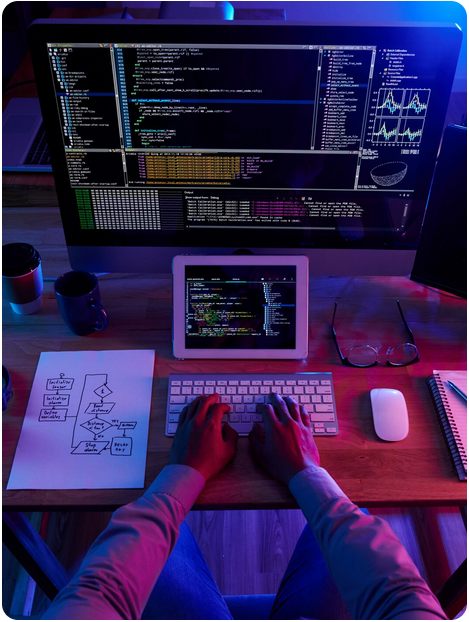
A website is a digital platform on the internet that enables companies, organizations, and individuals to present information, services, and products to a global audience.
Modern websites function as:
* Business presentation platforms
* E-commerce stores
* Marketing and branding tools
* Customer communication systems
* Content platforms and information hubs
A professional website acts as a digital office that is open 24/7, building trust, generating leads, and allowing customers to learn more about your services.
Web design focuses on the visual experience and user interface of a website. It ensures that visitors can easily navigate and understand the content.
Key elements of web design include:
* User Interface (UI)
* User Experience (UX)
* Layout and structure
* Color systems and typography
* Responsive mobile design
* Accessibility
Good web design increases credibility, improves engagement, and ensures that visitors stay longer on the site.
What is web development?
Web development is the technical process that builds the functionality of a website. While web design focuses on appearance, development focuses on how the system works.
Frontend Development:
builds the visible part of the website using technologies such as:
* HTML – structure
* CSS – styling
* JavaScript – interactivity
Backend Development:
Powers the system behind the website, such as:
* Databases
* Login systems
* Payment systems
* APIs and integrations
Although web design and graphic design are related, they serve different purposes.
Graphic Design
* Logos
* Brand identity
* Print media and marketing visuals
Web Design
* Website layout
* User interaction
* Navigation systems
* Responsive design
Graphic design creates visual assets, while web design builds an interactive digital experience.
Websites carry costs
Developing a professional website requires several technical and creative processes.
* Strategic planning and architecture
* UI/UX design
* Programming and development
* Testing and optimization
* Search Engine Optimization (SEO)
* Security implementation
* Performance optimization
Every website is tailored to a company's specific needs, which is why development time and pricing vary depending on complexity.
A website requires several technical services to remain online and secure.
* Domain name registration
* Secure web hosting infrastructure
* Regular updates
* Security monitoring
* Performance optimization
* Content updates
Ongoing maintenance ensures the website remains secure, fast, and compatible with modern technology.
Game programming is one of the most advanced areas of software development. It involves creating interactive, real-time environments where code, physics, graphics, and user interaction must work together seamlessly in an environment that updates 60 times per second.
It covers a variety of specialized disciplines:
* Game engine architecture
* Physics simulation
* AI and logic
* Optimized rendering
Why is it so complex?
* Real-time requirements
* System interoperability
* Hardware constraints
Unlike traditional web or app development, where data is often static, game programming is deterministic chaos in real-time. Investing in professional game programming is an investment in a robust technical foundation. When the technology works invisibly in the background, it allows the player to fully lose themselves in the experience – and it is precisely this invisible engineering that distinguishes a mediocre project from a world-class product.
Mobile programming is about creating software for devices with limited resources, unique user interfaces, and strict hardware requirements. While a website runs in a browser, a mobile application runs directly on the device's operating system, providing a significantly richer and faster user experience.
What does mobile programming involve?
Developing for mobile basically involves two parallel tracks:
* Native Development
* Apple Swift
* Android Kotlin
* Cross-platform Development
* React Native or Flutter
* Fragmentation management
* Hardware interaction
* Lifecycle management
Professional mobile development is about balancing user-friendliness with technical performance. By investing in a well-thought-out architecture from the start, you create not just an app that impresses today, but a digital asset that can grow and be secured for future demands.
VR programming is about creating a credible, interactive, and responsive environment where the user is inside the game or application. It requires an understanding of how the human brain interprets space and movement.
What does VR programming involve?
Working with VR places unique demands on the developer:
* Spatial programming
* Input handling
* Haptic feedback
Why is it so complex?
* Latency tolerance
* Stereoscopic rendering
* Collision handling
VR programming is engineering at the edge of what is possible for today's hardware. Creating a seamless VR experience requires not only mastering code but also understanding optics, human physiology, and advanced 3D mathematics. It is an investment in creating the interfaces of the future, where the user goes from being a spectator to being a participant.